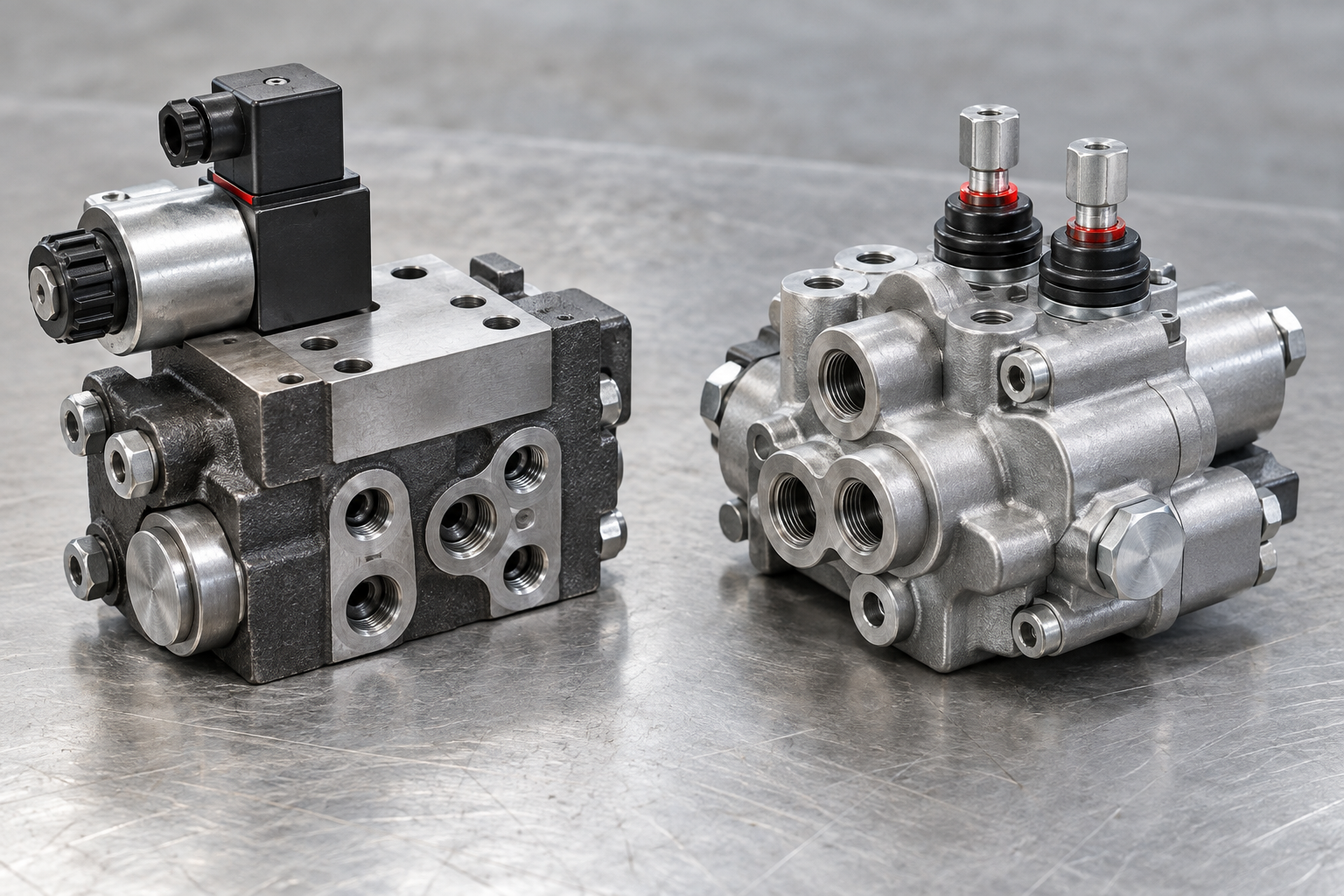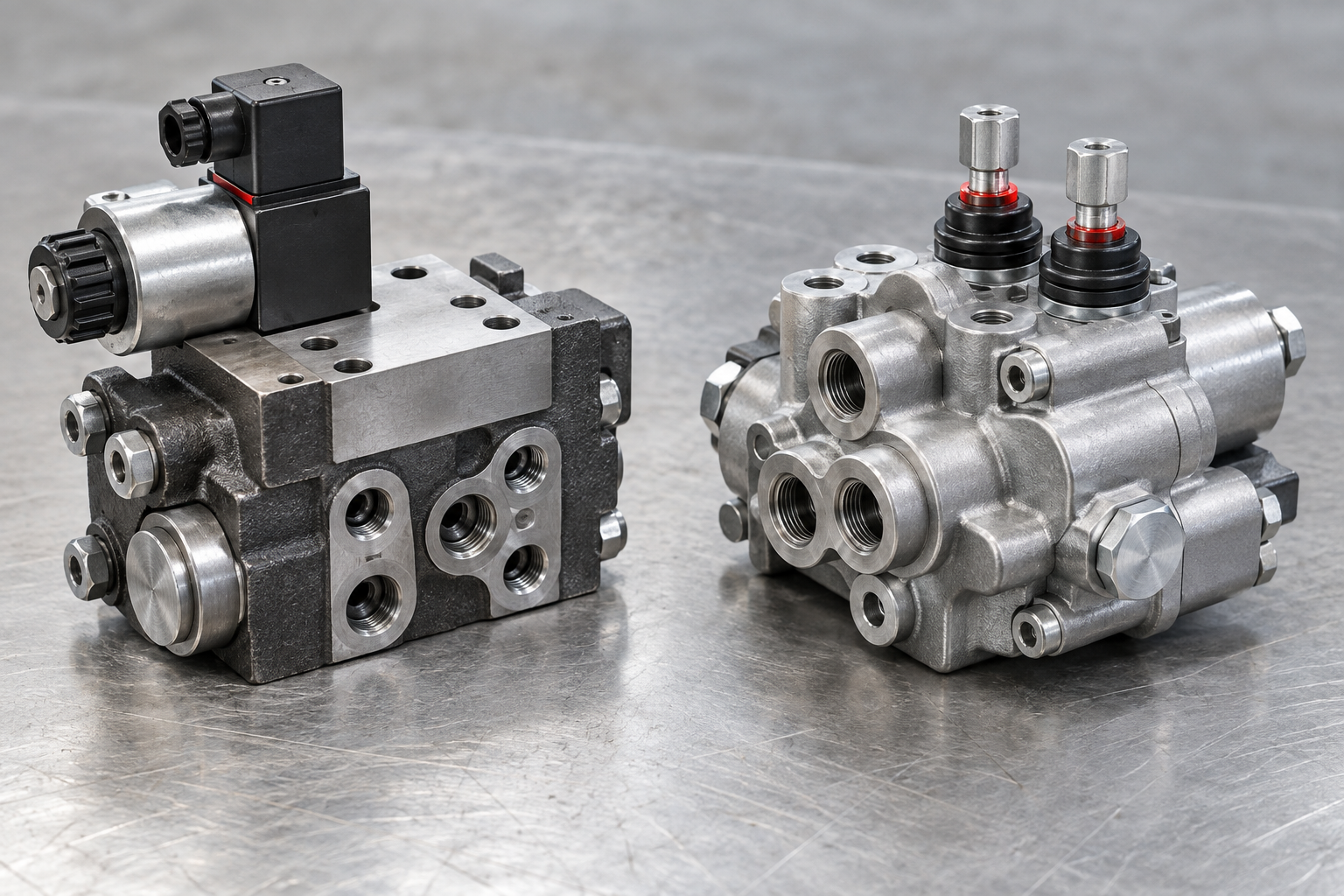
Relief and reducing valves both respond to pressure, but they act on different parts of a circuit. Replacing one with the other can change the machine's behavior even when their adjustment ranges overlap.
Compare the controlled side
A relief function typically opens a route when upstream pressure reaches its operating characteristic. A reducing function regulates a lower pressure downstream while the supply remains higher. Identify the pressure measurement point before choosing the function.
Compare normal circuit behavior
A main relief may pass little flow during efficient normal operation, then divert flow during a pressure-limiting event. A reducing valve can remain in the working supply path to a low-pressure branch. Both need suitable capacity, but their pressure-flow behavior answers different design questions.
Check functions that the name leaves out
A reducing-relieving design can also release downstream pressure, whereas a simple reducing function may not. Drain conditions and reverse-flow provisions matter. Attach the required hydraulic symbol and branch layout to a replacement request instead of asking only for a pressure-control valve.
Practical checklist
- Identify whether upstream or downstream pressure is controlled.
- Specify the flow that must pass through each required path.
- Check downstream relief, reverse flow and drain requirements.
Discuss your application
Explore related hydraulic products, or send JIUDING your model code and application details. Include the circuit drawing and the operating conditions relevant to the checks above so the required configuration can be reviewed.
Cover image: AI-generated editorial illustration, not a model-specific product drawing or a photograph of a JIUDING facility.