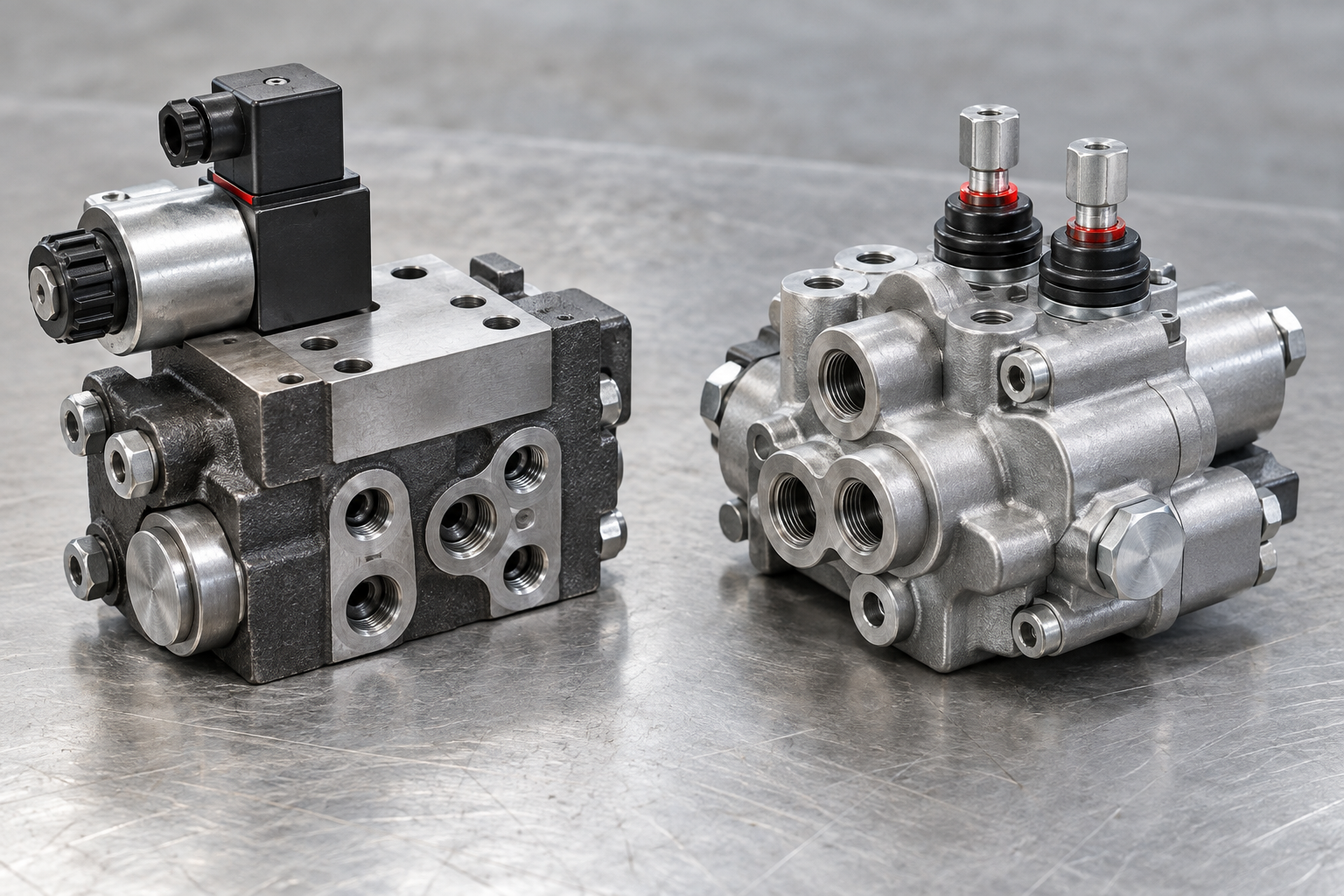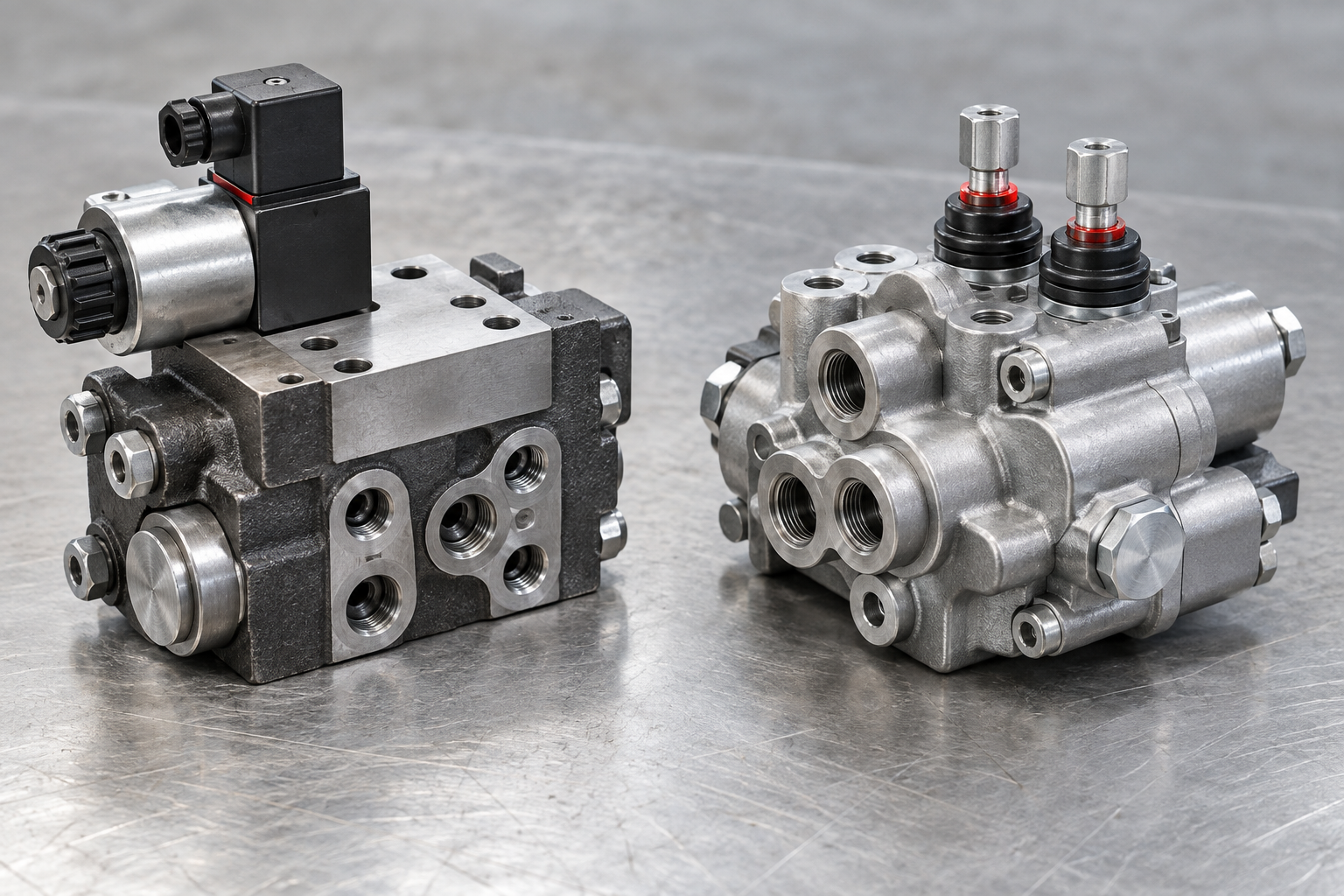
Both valve families can appear in load-holding circuits, but their motion behavior is not interchangeable. The essential question is whether the circuit only needs to block flow or also needs to regulate a load-driven movement.
Compare holding and opening
A pilot-operated check blocks reverse flow and opens when the pilot force is sufficient. A counterbalance arrangement combines pressure-responsive load control with piloting and commonly includes a free-flow check path. The exact symbol and construction must be confirmed.
Examine the lowering phase
A load that pulls the cylinder faster than the pump supplies it can create instability or loss of control. Simply releasing a check valve does not guarantee a controlled descent. Analyze actuator area ratios, pilot pressure and the load throughout its travel.
Make replacement a circuit review
Do not select an alternative solely because its ports fit or because it holds pressure on a bench. Request review of load-induced pressure, return backpressure and dynamic behavior. Any service work on a held load requires approved mechanical support and stored-energy isolation.
Practical checklist
- Define whether the load can drive the actuator.
- Provide the complete cylinder and valve circuit.
- Agree on both static holding and dynamic lowering tests.
Discuss your application
Explore related hydraulic products, or send JIUDING your model code and application details. Include the circuit drawing and the operating conditions relevant to the checks above so the required configuration can be reviewed.
Cover image: AI-generated editorial illustration, not a model-specific product drawing or a photograph of a JIUDING facility.