An unfamiliar pump noise deserves prompt investigation, but sound alone cannot reliably identify cavitation, air entry or mechanical wear. Combine the observation with inlet conditions, oil appearance and operating data.
Record when the sound changes
Note cold versus warm operation, speed, load and reservoir level. A noise that appears only at high speed or during a cold start suggests a different investigation from one that continues unchanged at every condition.
Review the inlet path
Restrictions, inadequate fluid supply or air leakage can disturb inlet conditions. Examine the approved hose and fitting arrangement, fluid level and maintenance history. Do not loosen suction or pressure fittings on an operating machine or run a pump without the required fluid supply.
Check drive and mounting factors
Misalignment, coupling damage, vibration transmission and external shaft loading can contribute to noise. Qualified service personnel should inspect these with the drive isolated. A replacement pump may fail again if the inlet or mechanical cause is not corrected.
Practical checklist
- Record speed, pressure, temperature and when noise begins.
- Check inlet conditions against the specific pump documentation.
- Inspect the isolated drive and mounting arrangement.
Discuss your application
Explore related hydraulic products, or send JIUDING your model code and application details. Include the circuit drawing and the operating conditions relevant to the checks above so the required configuration can be reviewed.
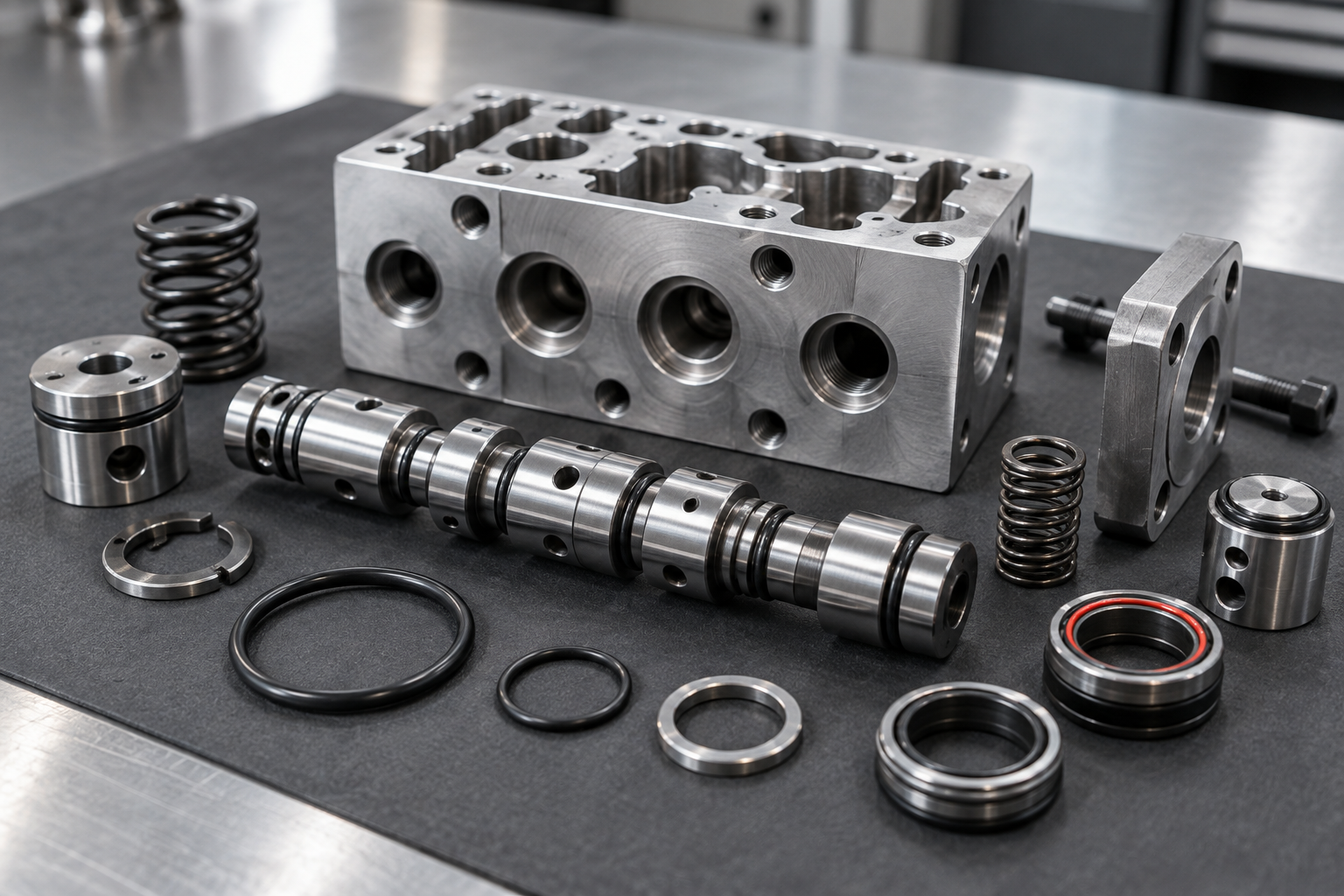
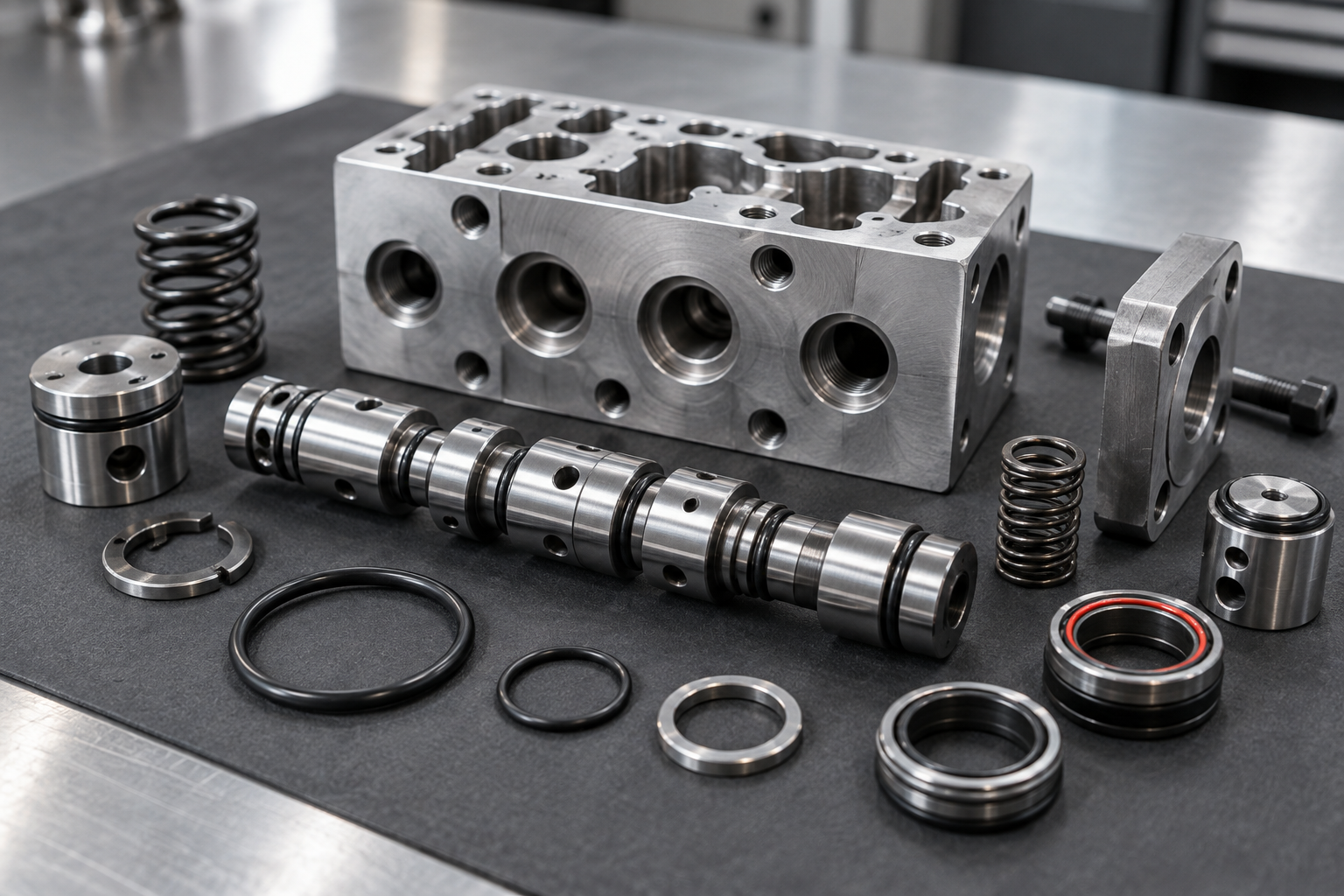
Cover image: AI-generated editorial illustration, not a model-specific product drawing or a photograph of a JIUDING facility.