Slow movement after a cylinder stops is a symptom, not a component diagnosis. The directional valve, holding valves, cylinder seals and fluid conditions can all influence the result.
Make the symptom measurable
Record drift distance over a defined time at a known position and load. Note oil temperature and whether the pump remains running. Repeat only under an approved safe procedure with the load secured; do not stand under a drifting mechanism.
Map possible leakage and pressure paths
Review the schematic for spool leakage, check-valve paths, relief connections and cylinder cross-port leakage. Thermal expansion and compression can also change position or pressure. Disconnecting a line to see what happens can release stored energy and is not an appropriate improvised test.
Use a controlled isolation plan
A qualified technician should follow the machine maker's diagnostic method to distinguish leakage sources. Compare results with component specifications under matching conditions. After a repair, repeat the same recorded test so the improvement can be assessed objectively.
Practical checklist
- Record position, load, temperature and elapsed time.
- Identify every possible path out of the loaded chamber.
- Use approved support and isolation for diagnostic work.
Discuss your application
Explore related hydraulic products, or send JIUDING your model code and application details. Include the circuit drawing and the operating conditions relevant to the checks above so the required configuration can be reviewed.
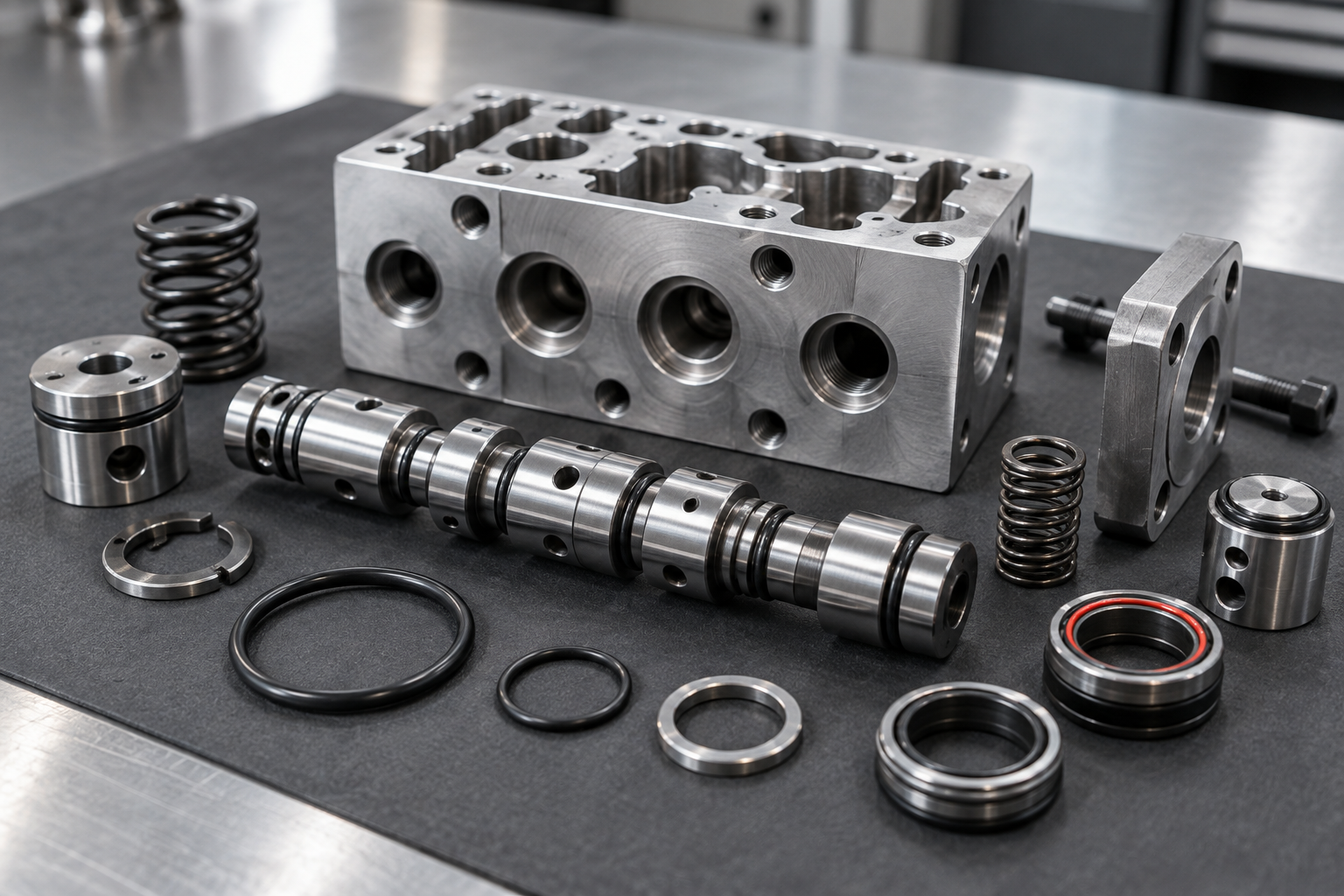
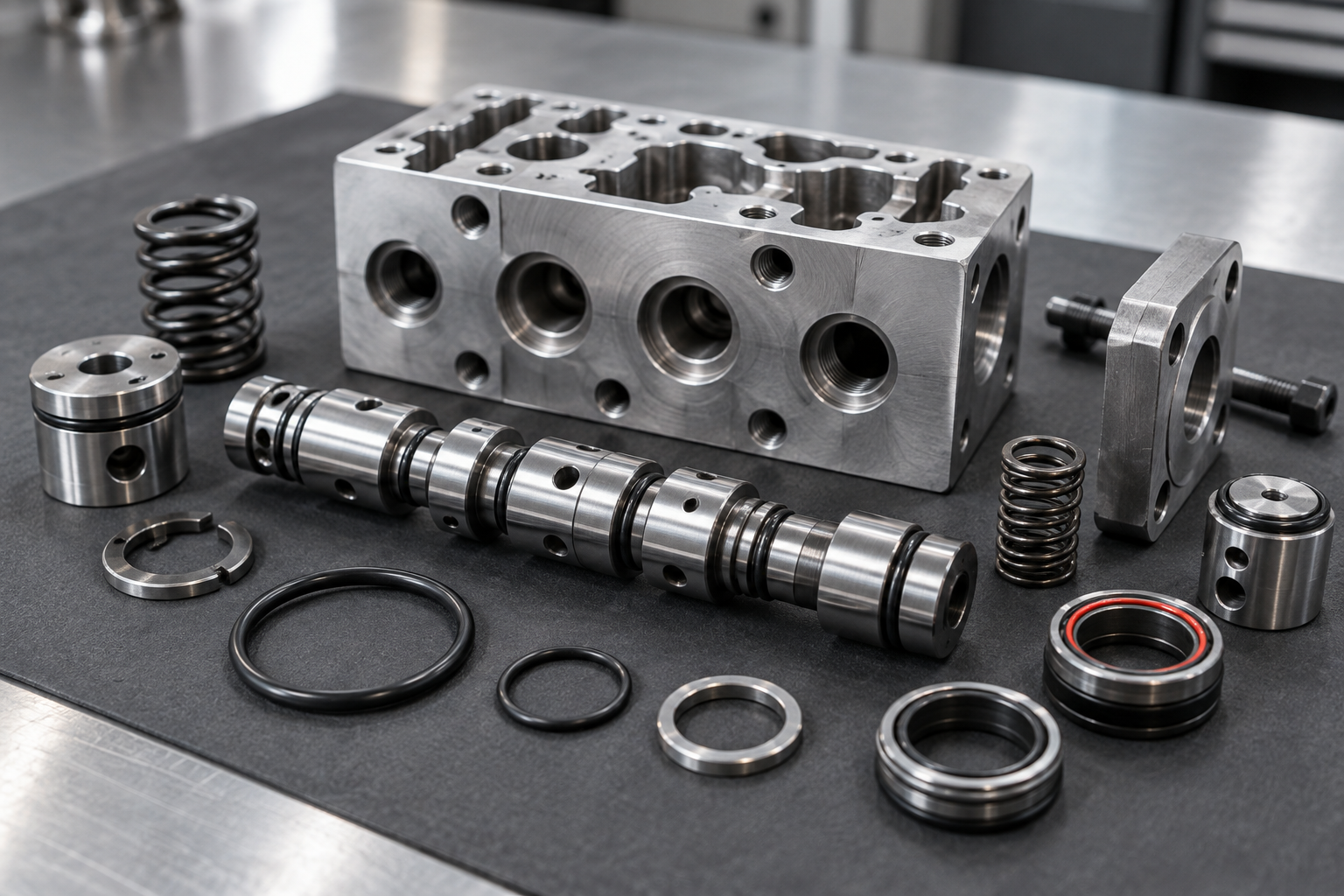
Cover image: AI-generated editorial illustration, not a model-specific product drawing or a photograph of a JIUDING facility.