Machine-tool hydraulics may spend much of a cycle maintaining readiness rather than moving an actuator. Understanding the idle state can reveal opportunities to reduce heat without changing the required working performance.
List the active functions
Record clamps, tool changes, lubrication-related functions where applicable and auxiliary actuators separately. Note their pressure, flow and timing requirements. Identify functions that operate together and those that only need intermittent delivery.
Trace flow when nothing moves
Determine where pump delivery goes during standby. A constant flow across a pressure restriction can consume energy without useful actuator work. Any unloading, pump-control or speed-control change must remain compatible with pressure retention and restart requirements.
Validate readiness and response
An efficient idle state is only useful if the next commanded function receives adequate flow and pressure on time. Measure cycle transitions and monitor fluid temperature. Review power-loss behavior and machine interlocks before modifying the original circuit.
Practical checklist
- Build a timing chart for hydraulic functions.
- Identify the standby flow path and pressure level.
- Test response after idle as well as continuous production.
Discuss your application
Explore related hydraulic products, or send JIUDING your model code and application details. Include the circuit drawing and the operating conditions relevant to the checks above so the required configuration can be reviewed.
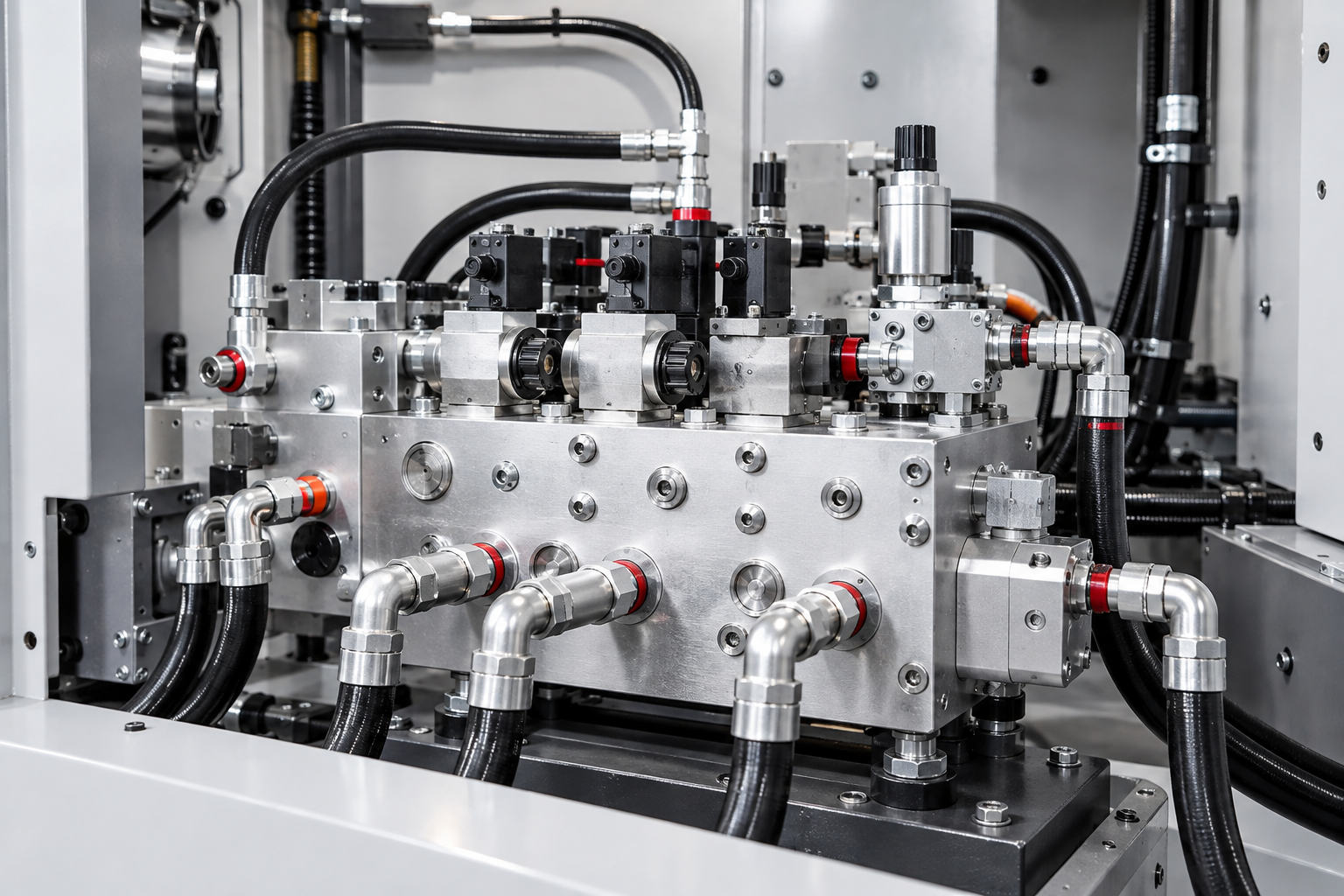
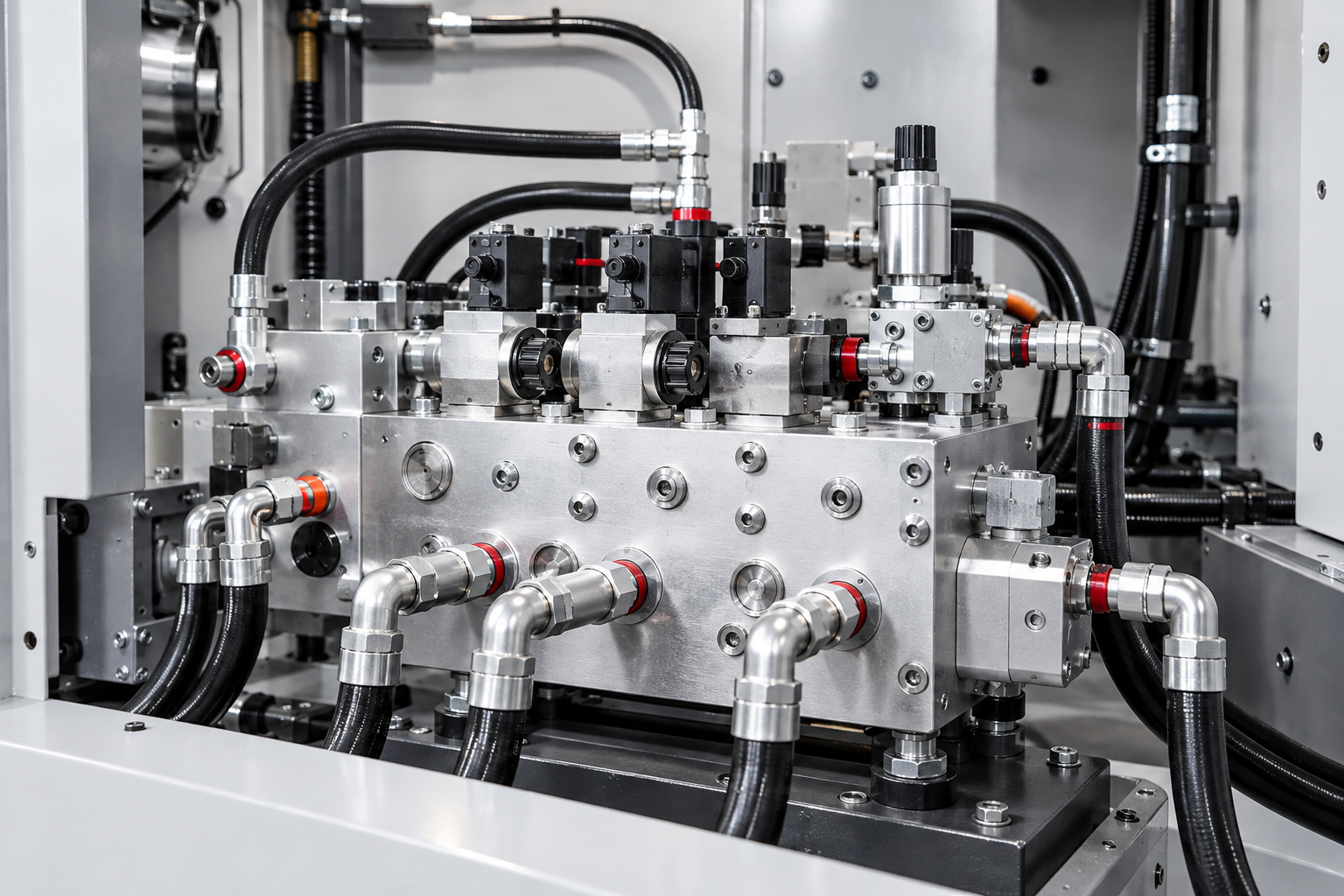
Cover image: AI-generated editorial illustration, not a model-specific product drawing or a photograph of a JIUDING facility.