A clamping circuit must do more than move a cylinder toward a workpiece. It must establish an appropriate force and provide whatever confirmation the machine needs before the next operation starts.
Define the process requirement
Record the required clamping force, acceptable variation and workpiece sensitivity. Cylinder area, mechanical leverage and pressure on both sides affect the result. More pressure is not automatically better; excessive force can damage the part or fixture.
Plan the pressure-control function
A branch may need pressure reduction while the rest of the machine operates at a higher level. Consider how pressure is maintained, relieved and monitored. Leakage and temperature can affect a trapped volume during a long dwell.
Decide what confirms a secure clamp
A pressure signal may indicate resistance but does not always prove correct workpiece position. Determine whether position sensing, pressure monitoring or other verification is needed. Sequence the machine through its approved control and safety design rather than relying on one hydraulic component alone.
Practical checklist
- Provide clamp force, cylinder geometry and dwell time.
- Define allowable pressure variation and release behavior.
- Specify the conditions required before the next process step.
Discuss your application
Explore related hydraulic products, or send JIUDING your model code and application details. Include the circuit drawing and the operating conditions relevant to the checks above so the required configuration can be reviewed.
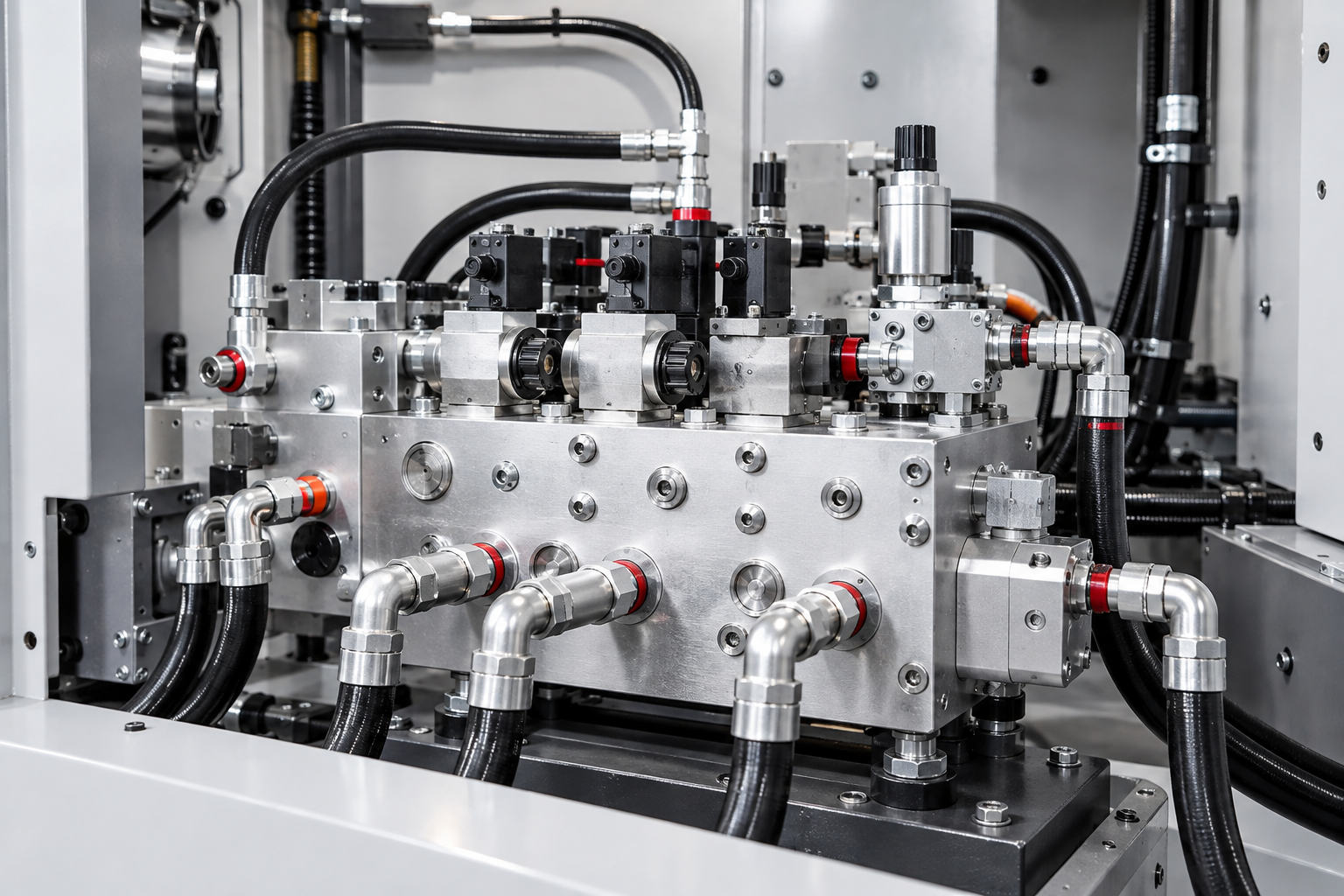
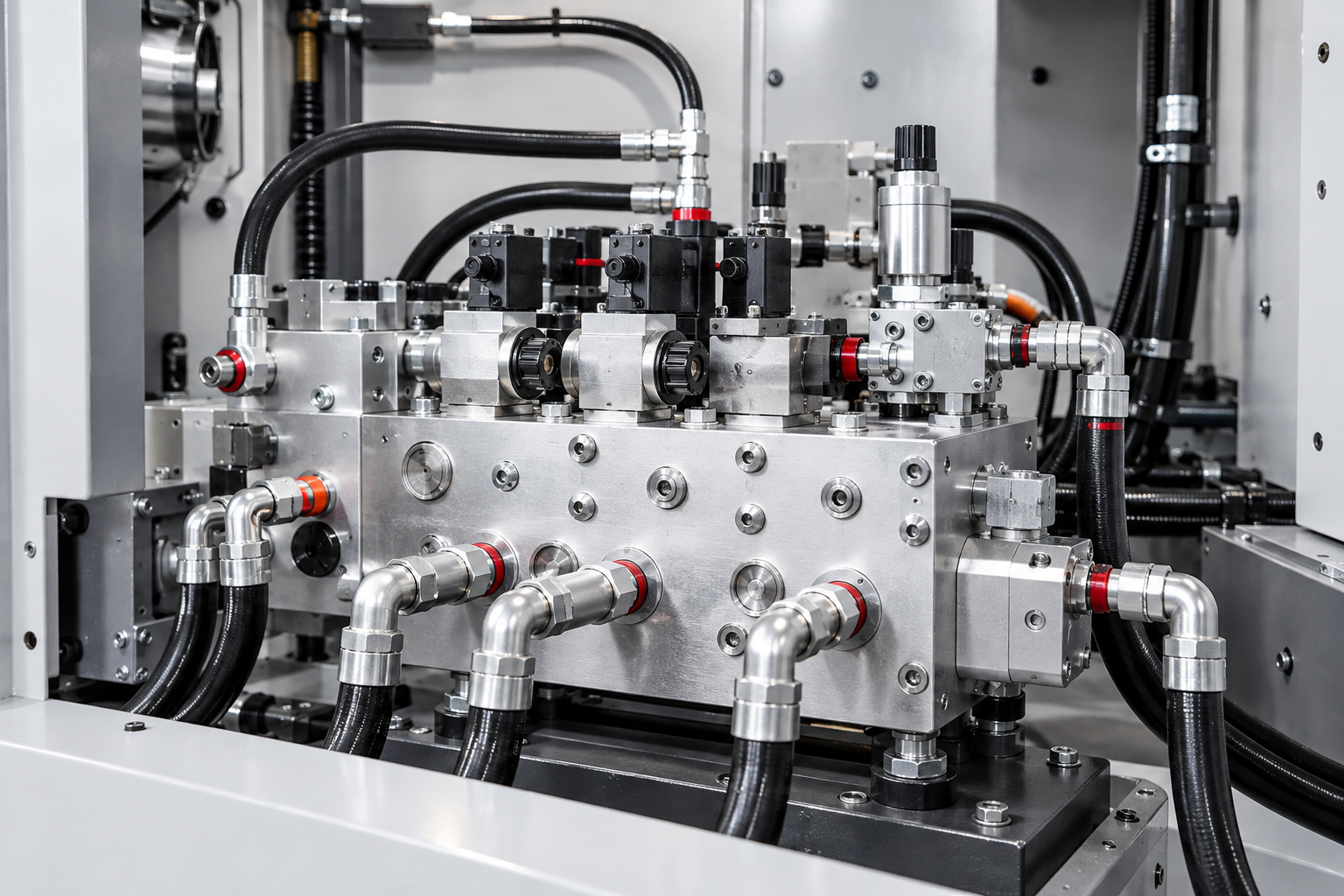
Cover image: AI-generated editorial illustration, not a model-specific product drawing or a photograph of a JIUDING facility.