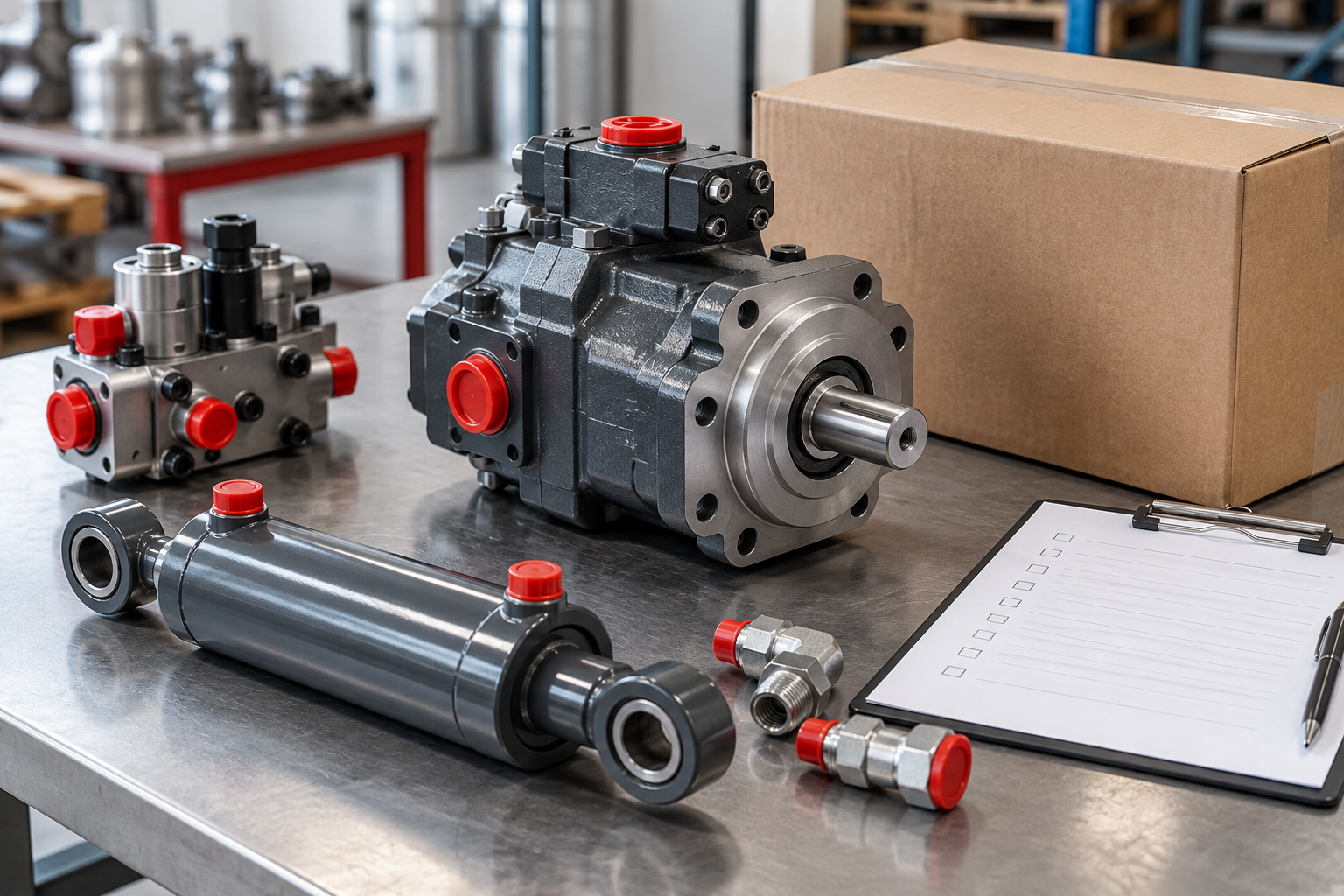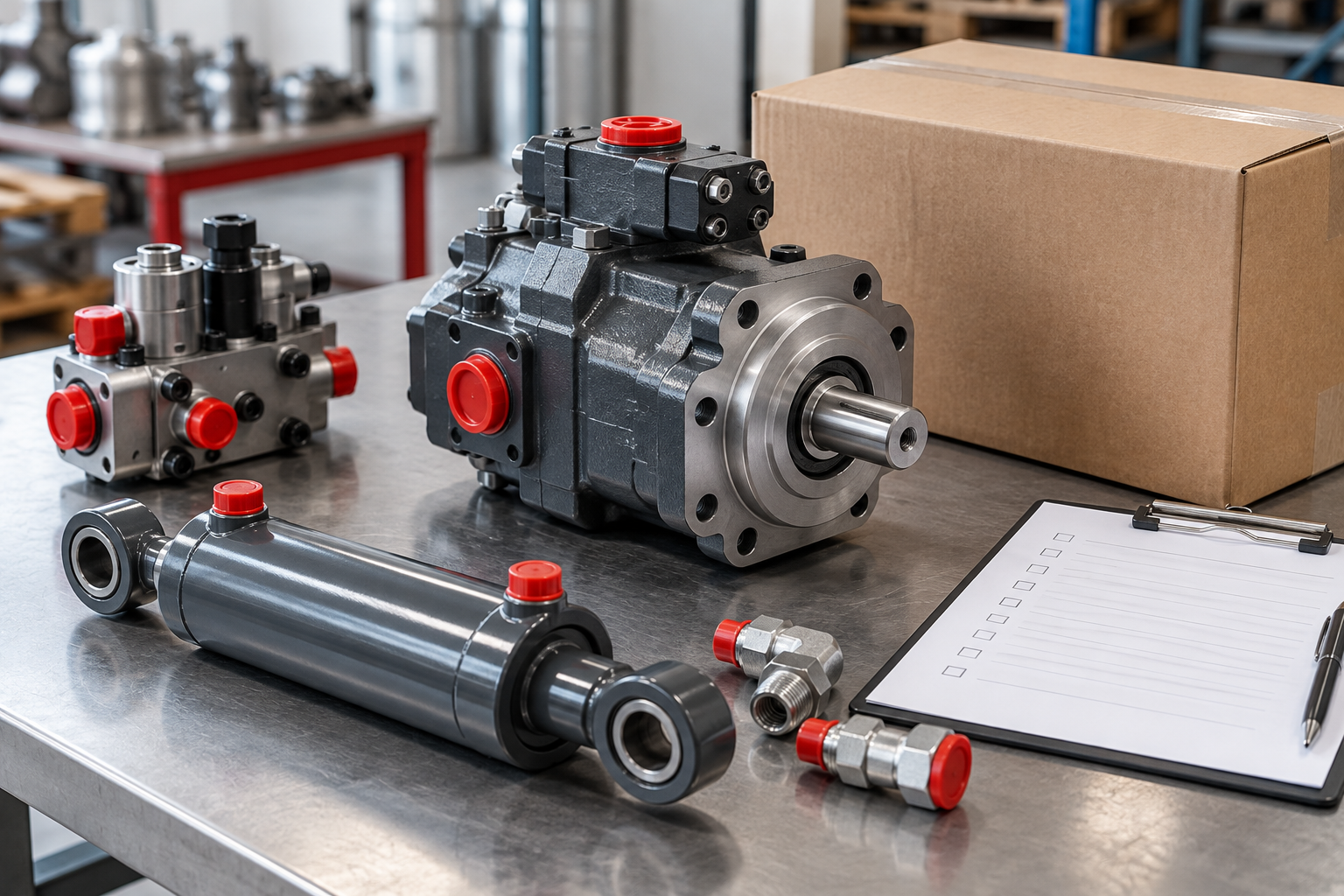
Hydraulic parts need protection against contamination as well as physical impact. Packaging should preserve the component's condition until receiving inspection and installation.
Protect openings and sensitive features
Use suitable clean port closures and protect shafts, connectors and machined faces. Packaging materials should not shed debris into exposed interfaces. Follow any supplier requirements for preservation fluid or corrosion protection.
Match the transport conditions
Consider handling loads, moisture exposure and the route to the destination. Secure heavy components so they cannot damage each other inside a carton or crate. Agree on packaging requirements with the supplier rather than assuming one format suits every shipment.
Make receiving identification easy
Label the package with the agreed part identity and quantity while retaining configuration records. Include inspection instructions where protection must be preserved. Photograph damage before unpacking further so transit issues can be documented accurately.
Practical checklist
- Specify port, shaft and machined-face protection.
- Agree on restraint and environmental protection for the route.
- Keep labels and documents tied to the supplied configuration.
Discuss your application
Explore related hydraulic products, or send JIUDING your model code and application details. Include the circuit drawing and the operating conditions relevant to the checks above so the required configuration can be reviewed.
Cover image: AI-generated editorial illustration, not a model-specific product drawing or a photograph of a JIUDING facility.